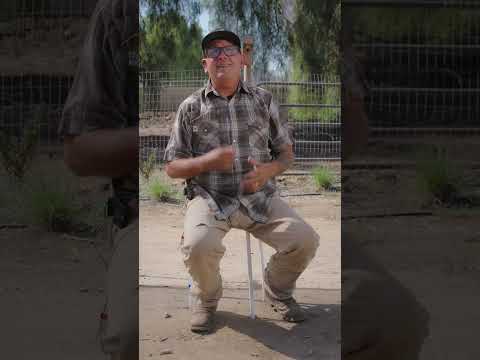
A former special education teacher, Lindsay Smith looked at an unused parking lot and saw something almost no one else could; a working farm in the middle of the city. Today that lot is Sowing Seeds of Change, an urban farm that gives transition-age youth with disabilities and foster youth a place to grow food, build skills, and imagine a future.
Lindsay spent years in the classroom before she traded chalkboards for garden beds. She kept meeting young people who were aging out of foster care or leaving school programs with nowhere to put their energy and no clear path to work. She wanted to build them a bridge, and she decided to build it out of soil.
The site was an ordinary parking lot, all asphalt and heat. Piece by piece it became rows of raised beds, compost stations, and shade; a green pocket in a place no one expected one. The transformation is the point, because if a parking lot can become a farm, a young person the system overlooked can become a grower, a leader, and a mentor.
The program pairs hands-on agriculture with vocational training, leadership development, and community engagement. Youth learn to plant, tend, harvest, and sell, and they pick up the quieter skills that come from showing up for a living thing every single day. The farm does the teaching; Lindsay and her team simply keep it running.
We filmed Sowing Seeds of Change because it captures what we believe at Leprendo: food is never just food. Behind every harvest is a person, a place, and a reason. Lindsay's reason is the young people who walk in unsure of themselves and walk out knowing they can grow something real.
This material is based upon work supported by the Agricultural Marketing Service, U.S. Department of Agriculture, under grant number 24FMPPCA1238. The contents are solely the responsibility of the authors and do not necessarily represent the official views of the USDA.